The Hidden Dangers of Ignoring Gutter Cleaning in Hackettstown
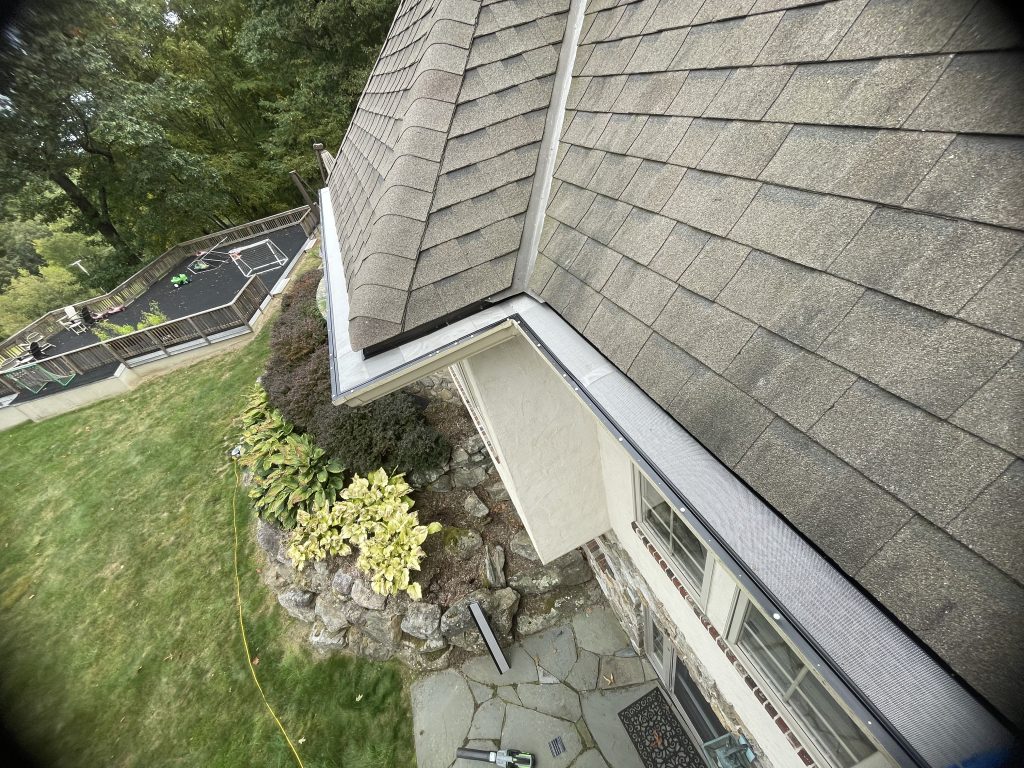

Gutters are easy to forget when they are doing their job. They sit at the roofline, out of sight, carrying rainwater away before it can soak fascia boards, flood planting beds, or leak into a basement wall. When they clog, the damage rarely announces itself right away. It starts quietly. A little overflow at one corner. A dark stain under the eave. A patch of mulch pushed out after a hard storm. By the time a homeowner notices the bigger symptoms, the repair bill is often far larger than the cost of routine maintenance.
That pattern shows up often in places like Hackettstown, where changing seasons put gutters through real stress. Spring brings heavy rain. Summer can dump fast, intense storms. Fall loads the system with leaves, twigs, and seed debris. Winter adds ice, freeze and thaw cycles, and the extra weight of snowmelt moving through a channel that may already be partially blocked. If you own a home here, ignoring gutter cleaning is not a small housekeeping issue. It is a risk management issue.
A lot of people think clogged gutters are mostly about appearance. They notice the weeds sprouting from the trough or the black streaks on the siding and assume the worst consequence is curb appeal. In reality, those are often the mildest warnings. Water almost always finds the weak point, and once it starts moving where it should not, it can affect trim, roofing, masonry, foundations, and indoor air quality.
Why gutters fail long before they fall off the house
A gutter system does not need to be packed solid to stop working properly. A thin mat of wet leaves in one section can slow drainage enough to create standing water. Add grit from asphalt shingles, pollen sludge, maple helicopters, and small twigs, and the bottom of the gutter starts to behave more like a shallow planter than a water channel.
Once that happens, weight becomes part of the problem. Dry leaves are light. Saturated debris is not. On older homes, especially where fasteners have already loosened over time, extra weight can pull gutters slightly out of pitch. You may not notice it from the driveway, but water notices. Instead of flowing to the downspout, it pools in the low spot. Pooling leads to more sagging, more overflow, and eventually separated joints or bent hangers.
In Hackettstown, many homes sit under mature trees, which is great for shade and property value but hard on gutters. Oak leaves, maple leaves, pine needles, seed pods, and tiny branch debris each behave differently. Oak leaves tend to mat down and form a dense barrier. Pine needles slip into downspouts and create stubborn blockages. Seed debris mixes with roof grit into a paste that clings to the gutter bottom. Homeowners who assume a quick glance from the lawn is enough often miss what is happening inside the downspout, where some of the worst clogs form.
Water rarely stays where you expect it
The main purpose of a gutter is simple, to collect roof runoff and move it away from the house. The hidden danger begins when that route is interrupted. Water that cannot enter the downspout spills over the front edge, behind the gutter, or at the corners. Each overflow path creates its own kind of damage.
Overflow at the front edge often pounds flower beds and topsoil directly below. After enough storms, this can expose roots, wash away mulch, and carve channels beside the foundation. Overflow behind the gutter is more serious. That usually means water is running back toward the fascia board and soffit. Wood trim stays wet longer than it was designed to, paint starts to fail, and rot can begin under the surface. I have seen fascia boards that looked fine from ten feet away but crumbled under light pressure because they had been absorbing water for several seasons.
Corners and seams are another trouble spot. When debris dams up in these areas, water lingers and finds tiny gaps. Those gaps widen over time. A homeowner may think they only need a bit of sealant, but sealant does not solve a drainage problem caused by a clog. It just delays the evidence.
This is one reason professional crews often talk about gutter cleaning as preventive maintenance rather than simple debris removal. The point is not just to clear leaves. The point is to restore controlled water movement.
Foundation damage starts above ground
People often separate roof issues from foundation issues, but water connects them. A blocked gutter can dump hundreds of gallons in the wrong place during a single heavy rain. Even if the house has decent grading, concentrated runoff at one corner can saturate the soil next to the foundation wall. Over time, that repeated saturation increases hydrostatic pressure against the wall and invites water into cracks, window wells, or the cove joint where the floor meets the wall in a basement.
Hackettstown homeowners with older basements know how unforgiving moisture can be. A little seepage may seem manageable at first, especially if it only appears during major storms. Then the smell starts. Cardboard stored along the wall gets damp. A dehumidifier runs more often. Paint bubbles on the interior masonry. What began at the roofline now looks like a basement problem, and many people spend money treating the symptom downstairs without correcting the source above.
There is also the matter of settlement. No gutter issue causes settlement overnight, but chronic oversaturation around the foundation perimeter can contribute to uneven soil behavior. In clay-heavy or mixed soils, expansion and contraction become part of the story. The damage may show up as hairline cracks around door frames, sticking windows, or separation where porches meet the house. Gutters are not the only factor in those problems, but poor drainage can absolutely make them worse.
Roof edges suffer first, and often quietly
One of the more expensive consequences of neglected gutters is damage at the roof edge. When backed-up water has nowhere to go, it can wick into the roof decking along the eaves. In colder months, this gets more dangerous. If the gutter is clogged and temperatures drop, trapped water can freeze. That ice blocks proper drainage even further. As snow on the roof melts and refreezes near the edge, the system can develop ice buildup that pushes water under shingles.
You do not need an extreme winter for this to happen. A modest freeze after a wet period is enough to start the cycle. Homeowners sometimes assume icicles are just part of winter charm, but large or persistent icicles often point to a water management problem. They can mean warm roof runoff is not draining quickly and is instead freezing at the edge.
The repair path from there gets expensive fast. A simple cleaning missed in late fall can lead to rotted roof sheathing, damaged underlayment, stained ceilings, and interior drywall repair. By that point, the gutter itself is only a small part of the invoice.
Pest activity thrives in neglected gutters
Clogged gutters create a surprisingly good habitat for pests. Wet organic debris holds moisture and warmth. Insects use it as cover. Birds pull from it for nesting. Mosquitoes can breed in standing water if enough of it collects and sits. Rodents are not living in the gutter itself in most cases, but clogged rooflines and overhanging branches make roof access easier, and that often leads them toward attics, soffits, and small openings around vents.
I remember one property where the homeowner called because birds kept gathering near the front entry. The issue was not the birds alone. A section of gutter over the porch had not been cleaned in a long time, and the debris had compacted into a thick, damp layer. It had become a reliable nesting source. Cleaning the gutter, trimming nearby limbs, and improving drainage solved more than a nuisance. It removed an invitation.
This matters because pest problems tied to moisture rarely stay isolated. Where there is standing water and decaying debris, there is often accelerated material breakdown nearby. That can attract carpenter ants, contribute to woodpecker activity, or encourage mold growth in shaded areas around the soffit.
Siding, brick, and walkways pay the price too
When gutters overflow regularly, exterior finishes take a beating. On vinyl siding, you often see vertical staining or green growth where water repeatedly sheets down the wall. On painted wood, the finish breaks down much faster than it should. On brick or stone veneer, splashback and saturation can leave discoloration or contribute to efflorescence, the white mineral residue that appears when water moves through masonry and evaporates.
Walkways and entry areas can become slippery if overflow lands in the same place storm after storm. In winter, that repeated wetting can turn a front step or side path into an ice hazard. This is a practical liability issue, not just a maintenance concern. The same water that should have moved cleanly through a downspout ends up where people walk.
Landscaping suffers too. People invest good money in foundation plantings and decorative beds, then lose soil and mulch because one downspout is clogged and another is discharging too close to the house. The fix is often straightforward, but only if it happens before erosion has reshaped the grade.
The warning signs most homeowners miss
Visible overflow during a rainstorm is the obvious one, but the less dramatic clues are often more useful because they show up earlier. Small signs tend to appear in clusters. A gutter that looks slightly bowed. Fasteners that seem to be backing out. Rust specks around joints. Dark streaks on the fascia. Mulch trenches below the eaves. Peeling paint near the roofline. None of these proves a severe problem by itself, but together they usually mean drainage has not been right for a while.
A common mistake is waiting for a leak. By the time water reaches the interior, the outside materials have often been under stress for months or years. If you ever hear water dripping inside a downspout long after a rain has ended, that can also point to standing water trapped somewhere in the system rather than free drainage.
Another clue is plant growth in the gutters. It sounds almost absurd until you see it, but once organic material accumulates deeply enough, wind-blown seeds will root in it. At that stage, you are no longer dealing with a simple seasonal cleanup. You are dealing with a drainage system that has been functioning as a planter.
Why Hackettstown homes face a particular mix of risks
Every region has its own drainage challenges. In Hackettstown and the surrounding part of northwest New Jersey, the issue is less about one extreme condition and more about repetition. Homes experience regular leaf fall, storm cycles across multiple seasons, and winter conditions that can turn a partial blockage into a damaging ice problem. Older neighborhoods may also have houses with original trim details, aging fascia, or previous repairs that are less forgiving when moisture returns year after year.
Roof design plays a role too. Steeper roofs shed water faster, which means clogged gutters overflow more dramatically. Lower-pitch roof sections over porches or additions can hold debris longer and drain more slowly. Valley areas often dump a concentrated volume of water into one short run of gutter, which is where clogs and overflow become especially destructive.
This is why Gutter Cleaning Hackettstown should not be approached as a generic task. The right schedule depends on the lot, the trees, the roof design, and the age of the house. A heavily wooded property may need attention more than once in fall and again after spring seed drop. A newer home in a less treed area may need less frequent service, but still needs regular inspection because one blocked downspout can do a lot of damage.
The false economy of putting it off
Homeowners delay gutter cleaning for understandable reasons. It is not a glamorous project. The benefit is mostly preventive. If money is tight, visible needs inside the house often win. But the numbers usually tilt hard in favor of maintenance.
A routine cleaning costs a fraction of what it takes to repair rotted fascia, replace damaged drywall, regrade a washed-out planting bed, or address basement water intrusion. Even modest wood repair and repainting can exceed what several years of maintenance would have cost. Once mold remediation or roofing work enters the picture, the gap gets wider.
The bigger issue is that deferred gutter care often creates stacked repairs. A homeowner may pay separately for siding washdown, soffit repair, leak investigation, and landscaping correction without realizing they all trace back to the same neglected drainage path. It is one of the most common cases where small maintenance prevents large, scattered expenses.
When cleaning is enough, and when it is not
Not every gutter problem is solved by cleaning alone. Sometimes cleaning reveals the real issue. Hangers may be too far apart. Pitch may be off. Downspouts may discharge too close to the foundation. Guards may be trapping fine debris rather than preventing buildup. Seams may have opened after years of standing water and seasonal movement.
That is where judgment matters. A homeowner might clean the gutters and still see overflow during the next storm because the trough is undersized for a roof valley or because a downspout is partially crushed near grade. In those cases, maintenance and correction go together.
Good service should include more than scooping debris. It should identify whether water is moving properly, whether the gutter is secure, and whether the discharge point is doing its job. If the water leaves the roof correctly but ends up pooling at the base of the house, the system is only halfway solved.
Timing matters more than people think
The best time to clean gutters is before they show you a problem, which sounds obvious until the calendar gets crowded. In practice, timing should match the property rather than a rigid once-a-year rule. Many homes benefit from a late fall cleaning after the main leaf drop and a spring inspection to clear winter residue and check for damage. Properties with pines, heavy canopy coverage, or frequent storm debris may need additional attention.
What matters is not chasing perfection. It is avoiding the period when debris becomes saturated, compacted, and heavy enough to interfere with drainage. A gutter with a light scattering of dry leaves is very different from a gutter packed with wet organic matter after several storms.
That is also why emergency cleanings cost more in a practical sense. Once a system is overflowing during active weather, you are already reacting from behind. Preventive scheduling is almost always less stressful and less expensive.
What homeowners can safely look for
You do not need to climb a ladder to gather useful information. During or just after a solid rain, walk the perimeter and pay attention to where water is going. Look for sheeting over the gutter edge, drips behind the gutter, splash marks on siding, or puddling near the foundation. Stand back and sight along the gutter line. Notice any visible sag or unevenness. Check whether downspout discharge is carrying water far enough from the house.
If you can safely observe from the ground with binoculars, look for debris mounded above the gutter lip or vegetation growing from the channel. Also watch for staining below joints and corners. These are practical, low-risk observations that often reveal whether professional cleaning or repair is due.
Choosing a practical standard, not a cosmetic one
Some homeowners judge gutters by whether they look tidy from the street. A better standard is performance. The system should collect water, move it without backing https://beaugtih623.image-perth.org/what-happens-when-you-delay-gutter-cleaning-in-hackettstown up, and discharge it where it will not harm the house. That sounds simple, but it is exactly what neglected gutters stop doing.
For anyone evaluating Gutter Cleaning Hackettstown services, it helps to think beyond leaf removal. You want clear channels, clear downspouts, sound attachment, proper pitch, and discharge that protects the foundation. You also want someone who recognizes the difference between a seasonal cleanup and a system that is beginning to fail.
A clean gutter is not the end goal. Controlled drainage is. That is what protects the roof edge, the siding, the landscaping, and the basement. Ignore that long enough, and the damage becomes expensive in places that seem unrelated until you trace the water back to where it started, right at the top of the house.
Just Gutters LLC
Address: 262 Main St, Hackettstown, NJ 07840
Phone number: +12013319454
FAQ About Gutter Cleaning Hackettstown
How much should a gutter clean cost?
Professional gutter cleaning typically costs between $163 and $333, with a national average of around $210 to $250 for a standard-sized home.
What months should you clean gutters?
You should clean your gutters twice a year—once in late autumn (November to December) and once in late spring (April to May).
Is it worth paying for gutter cleaning?
Yes, paying for gutter cleaning is worth it because it prevents thousands of dollars in water damage, roof leaks, and structural repairs.